
 by
by 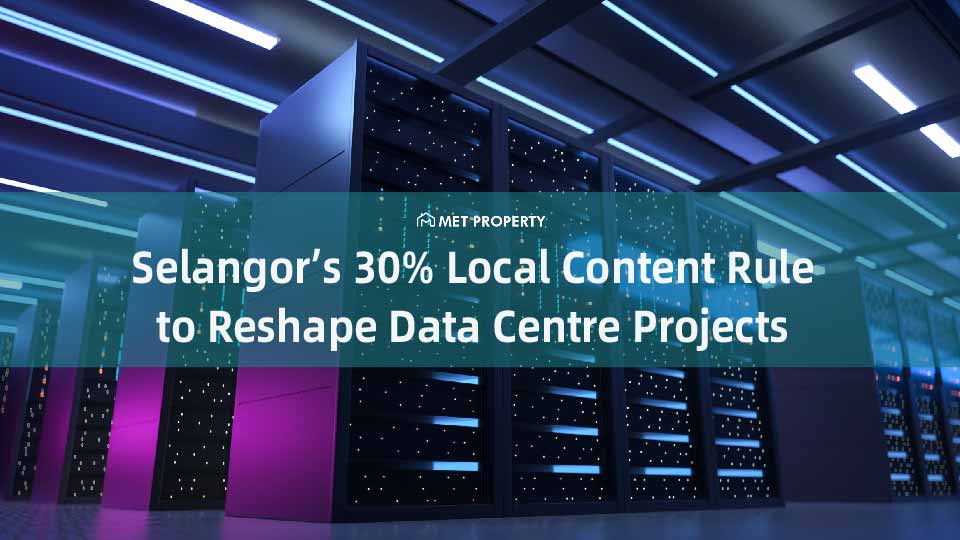
“Selangor’s 30% local content requirement is expected to shift data centre growth towards larger, higher-value projects, favouring Tier-1 developers, says BIMB Securities.”
Kuala Lumpur, 29th December 2025, 04.51pm – Selangor’s newly introduced 30% local content requirement for data centres, following Johor’s stricter approval framework, is expected to result in fewer but significantly larger and more valuable projects, according to BIMB Securities Research.
The research house said the policy signals a structural shift from volume-driven to quality-driven growth, making future data centre developments more capital-intensive and technically demanding. This trend is likely to benefit experienced hyperscale-grade developers and contractors capable of meeting higher operational, sustainability and localisation standards.
In November 2025, Selangor announced its local economy development policy aimed at increasing domestic participation in the data centre value chain. Under the policy, all new data centre projects must incorporate at least 30% local content, ensuring Malaysian firms, technology providers and workers capture greater economic benefits from the sector.
BIMB Securities noted that the move addresses longstanding concerns that data centre investments, while highly capital-intensive, have historically delivered limited multiplier effects to the local economy.
The local content requirement spans multiple segments, including integrated circuit design, cooling solutions, engineering works and related services, with the objective of strengthening domestic supply chains, encouraging technology transfer and expanding workforce participation.
The research firm added that Selangor’s policy places the state ahead of federal agencies, such as the Malaysian Investment Development Authority (MIDA), which have yet to impose similar mandates. It said the move reflects confidence that local vendor capabilities have matured sufficiently, and that policy intervention is necessary to reduce reliance on entrenched foreign suppliers.
Selangor’s approach follows Johor’s tighter data centre approvals, where new Tier I and Tier II facilities are no longer permitted due to high water consumption and capacity constraints. Johor now prioritises more resource-efficient Tier III and Tier IV data centres.
“Taken together, this operating environment is supportive for Tier-1 players such as Gamuda Bhd and Sunway Construction Group Bhd, which are better positioned to comply with higher technical, sustainability and localisation requirements,” BIMB Securities said. The firm added that these measures should contribute to a more sustainable and investable data centre ecosystem over the medium term.
Johor is projected to host around 500 megawatts (MW) of data centre capacity by 2025, expanding to 3 gigawatts (GW) by 2030. Selangor, while smaller in scale, is expected to see two major 1GW data centre projects come on stream within the next three years.

Join The Discussion