
 by
by 
“Malaysia’s LRT3 Shah Alam Line is expected to start operations by June 2026 after technical testing delays, with trial runs ongoing and project costs revised to RM21.93 billion.”
Kuala Lumpur, 24th February 2026, 05.50pm – The Light Rail Transit 3 (LRT3) line, also known as the Shah Alam Line, is expected to begin operations by June 2026 following delays caused by technical issues, Transport Minister Anthony Loke Siew Fook told the Dewan Negara on Monday.
Loke said ongoing trial runs are being carried out to ensure the rail system operates smoothly before public service begins. So far, 14 out of 22 train sets have successfully completed testing, while the remaining eight are still undergoing trials due to unresolved technical challenges.
The minister clarified that the delay was not linked to earlier project revisions made in 2018. Instead, the setbacks were caused by technical problems identified during testing and commissioning, particularly involving signalling systems and fault-free run requirements.
The LRT3 project was first launched in 2016 under the Barisan Nasional administration with an initial announced budget of RM9 billion. However, when the Pakatan Harapan government took office in 2018, it revealed that several major costs — including project delivery partner fees, consultancy charges, operational expenses, overheads, and construction interest — had not been included, raising the total estimated cost to RM31.7 billion.
To control spending, the government later revised the project scope by cancelling one station and shelving five others, reducing the project cost to RM16.63 billion.
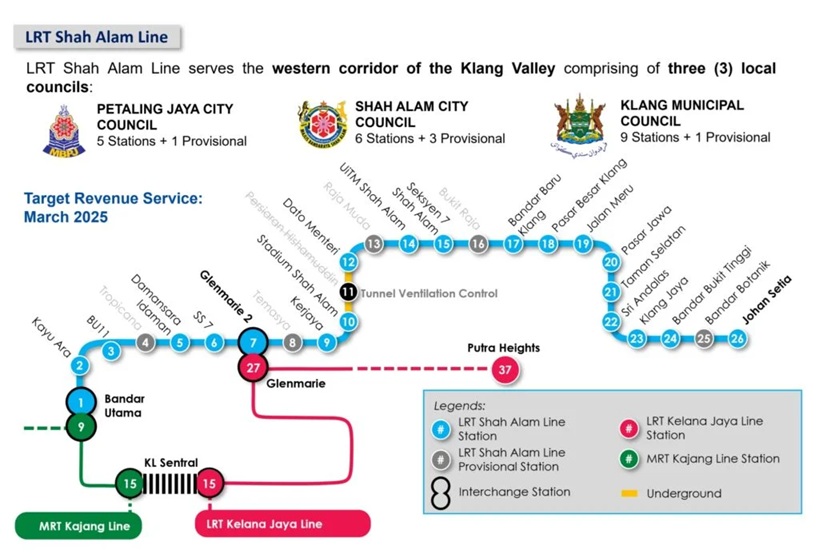
Subsequently, Prime Minister Anwar Ibrahim approved the reinstatement of five previously shelved stations — Tropicana, Raja Muda, Temasya, Bukit Raja and Bandar Botanik — adding RM5.3 billion to the project. The revision brought the total project cost to RM21.93 billion.
Once operational, the LRT3 line is projected to serve approximately 67,000 commuters daily. The rail line stretches from Bandar Utama in Petaling Jaya to Johan Setia in Klang, improving connectivity across the Klang Valley.
Loke added that the government will receive compensation for the delays, although the final amount will only be determined after the project is fully completed.
The LRT3 line was originally scheduled to open in July 2025 before being postponed to December 2025 and later rescheduled to June 2026.



Join The Discussion