
 by
by 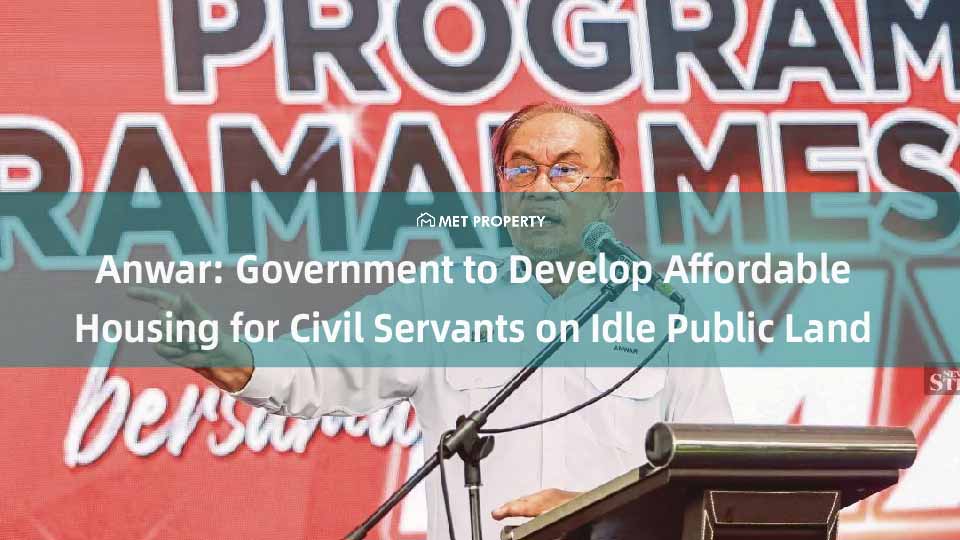
“The federal government plans to develop affordable housing for civil servants on idle public land, including Customs, Immigration and surplus school sites, says Prime Minister Anwar Ibrahim.”
Kuala Lumpur, 06th July 2026, 12.55pm – The federal government plans to accelerate the development of affordable housing for civil servants by optimising idle land owned by government agencies, Prime Minister Datuk Seri Anwar Ibrahim announced.
The initiative aims to improve access to home ownership while helping civil servants cope with rising property prices and living costs.
Speaking during the PMX Meet-and-Greet Programme in Johor, Anwar said underutilised land belonging to government agencies such as the Royal Malaysian Customs Department, Immigration Department and surplus school land could be redeveloped into affordable housing projects.
“If Customs land, Immigration land or excess school land is available, we will build affordable housing, at least for civil servants,” he said.
Optimising Government Land
According to Anwar, the initiative reflects the government’s commitment to making better use of existing public assets instead of relying solely on acquiring new land for housing development.
He said the programme has already moved beyond the planning stage, with implementation underway in several states.
Johor is among the first states to benefit from the initiative, where approximately 1,700 affordable housing units have already been approved and are currently under construction for civil servants.
Addressing Housing Affordability
The Prime Minister said affordable housing remains a priority as residential property prices continue to rise, making home ownership increasingly challenging for many public sector employees.
By repurposing idle government land, the administration aims to reduce development costs while expanding the supply of affordable homes in strategic locations.
The announcement was made during Anwar’s campaign visit ahead of the Johor state election.
MetProperty Analysis
The proposal to redevelop idle government land could unlock new opportunities for affordable housing, particularly in established urban areas where suitable land is becoming increasingly scarce.
Government-owned sites such as surplus institutional land, unused agency compounds and redundant public assets often occupy strategic locations with existing infrastructure, making them well suited for residential development.
If implemented on a wider scale, the initiative could help increase the supply of affordable homes while improving land utilisation and reducing development costs. It may also complement existing affordable housing programmes by providing additional land resources without requiring major new land acquisitions.
For the property sector, the policy signals continued government support for affordable housing as a key component of Malaysia’s long-term urban development strategy.


Join The Discussion