
 by
by 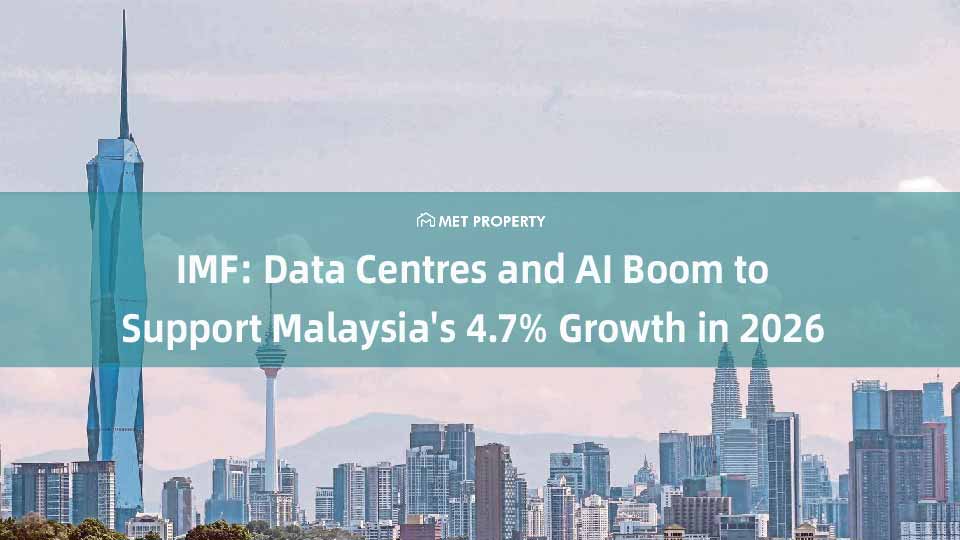
“The IMF expects Malaysia’s economy to grow 4.7% in 2026, supported by data centre investments, AI infrastructure and the global technology upcycle despite rising geopolitical risks.”
Kuala Lumpur, 09th July 2026, 12.25pm – Malaysia’s expanding data centre industry and the global artificial intelligence (AI) technology boom are expected to remain key drivers of economic growth this year, according to the International Monetary Fund (IMF).
In its July 2026 World Economic Outlook Update, the IMF maintained Malaysia’s gross domestic product (GDP) growth forecast at 4.7% for 2026, before moderating to 4.3% in 2027.
The fund said Malaysia is well positioned to benefit from continued investment in AI infrastructure, digital technology and data centres as global demand for computing capacity accelerates.
“In Malaysia, the economy is projected to grow at a rate of 4.7% in 2026, benefitting from data centre activity and the upturn in the global technology cycle,” the IMF said in its latest report.
AI and Data Centres Supporting Growth
According to the IMF, economies integrated into the global technology supply chain are expected to outperform despite ongoing geopolitical uncertainties.
Malaysia was identified as one of the world’s leading net exporters of AI-related hardware alongside South Korea, Taiwan and Thailand.
The fund said stronger-than-expected economic performance during the first quarter reflected resilient demand for AI infrastructure, semiconductor products and digital technologies.
The continued expansion of hyperscale data centres across Malaysia is also expected to support investment, employment and broader economic activity.
Global Economy Faces New Challenges
While maintaining Malaysia’s outlook, the IMF revised its global growth forecast lower.
Global GDP is expected to ease from 3.5% in 2025 to 3.0% in 2026, before recovering modestly to 3.4% in 2027.
The organisation cited escalating geopolitical tensions, higher energy prices and supply chain disruptions as key downside risks.
Inflation is also projected to remain elevated, rising to 4.7% in 2026 before easing to 3.9% in 2027, driven by higher oil, natural gas and food prices.
Continued Investment in Digital Infrastructure
Despite global uncertainties, the IMF expects countries with strong exposure to AI investment, digital infrastructure and technology manufacturing to remain relatively resilient.
The organisation encouraged governments to continue investing in:
- Digital infrastructure
- Energy security
- Artificial intelligence capabilities
- Workforce skills development
- Fiscal resilience
These measures, it said, will help economies capture long-term benefits from AI adoption while strengthening economic competitiveness.


Join The Discussion