
 by
by 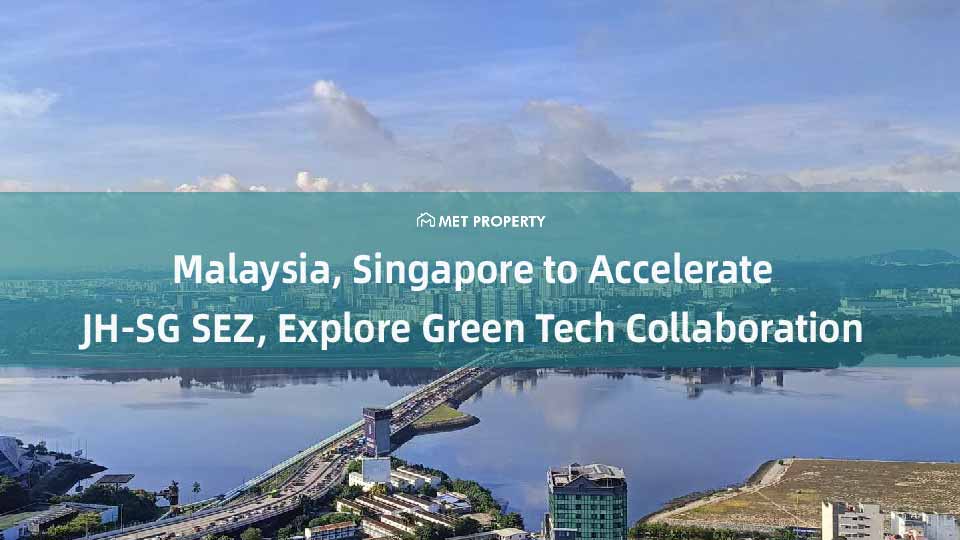
“Malaysia and Singapore are expediting the Johor-Singapore SEZ while exploring green technology cooperation, boosting cross-border investment and property growth.”
Kuala Lumpur, 16th April 2026, 5.00pm – Malaysia and Singapore have reaffirmed their commitment to fast-track the implementation of the Johor-Singapore Special Economic Zone (JS-SEZ), while expanding collaboration in green technologies, including carbon capture, utilisation and storage (CCUS).
Economy Minister Akmal Nasrullah Mohd Nasir said the matter was discussed during a bilateral meeting with Tan See Leng, Singapore’s Minister for Manpower and Minister-in-charge of Energy, Science and Technology.
JS-SEZ seen as key economic “game changer”
According to Akmal Nasrullah, the JS-SEZ remains a central cross-border initiative aimed at strengthening economic integration and enhancing the competitiveness of both countries.
“We discussed efforts to accelerate JS-SEZ implementation, which is a game-changing initiative in boosting economic complexity and cross-border collaboration,” he said in a statement.
The special economic zone is expected to drive investments, facilitate business expansion, and enhance connectivity between Johor and Singapore — positioning the region as a key growth corridor in Southeast Asia.
Singapore remains Malaysia’s top Asean trade partner
Akmal Nasrullah highlighted that Singapore continues to be Malaysia’s largest trading partner within Asean, with total trade reaching RM339.39 billion between January and October 2025.
He noted that the strong trade performance underscores the significant economic potential between the two countries.
Focus on green technology and energy resilience
In addition to economic cooperation, both sides explored opportunities in green technology, particularly in the development of CCUS solutions to support climate goals and energy transition efforts.
The discussions also covered regional readiness in addressing global energy challenges, including the impact of geopolitical tensions in West Asia on energy supply and costs.
Boosting investment and job opportunities
Akmal Nasrullah emphasised that the success of the JS-SEZ will ultimately depend on its ability to translate large-scale investments into tangible benefits for the public.
“This includes creating better job opportunities and economic prospects, especially for youth in Johor Bahru and across Malaysia,” he said.
Implications for property and regional development
The accelerated development of the JS-SEZ is expected to have a significant impact on the property sector, particularly in Johor, where demand for industrial, commercial, and residential developments could increase in tandem with cross-border economic activity.
Industry observers note that the initiative could further strengthen Johor’s position as a strategic investment destination, driven by its proximity to Singapore and growing infrastructure ecosystem.


Join The Discussion